

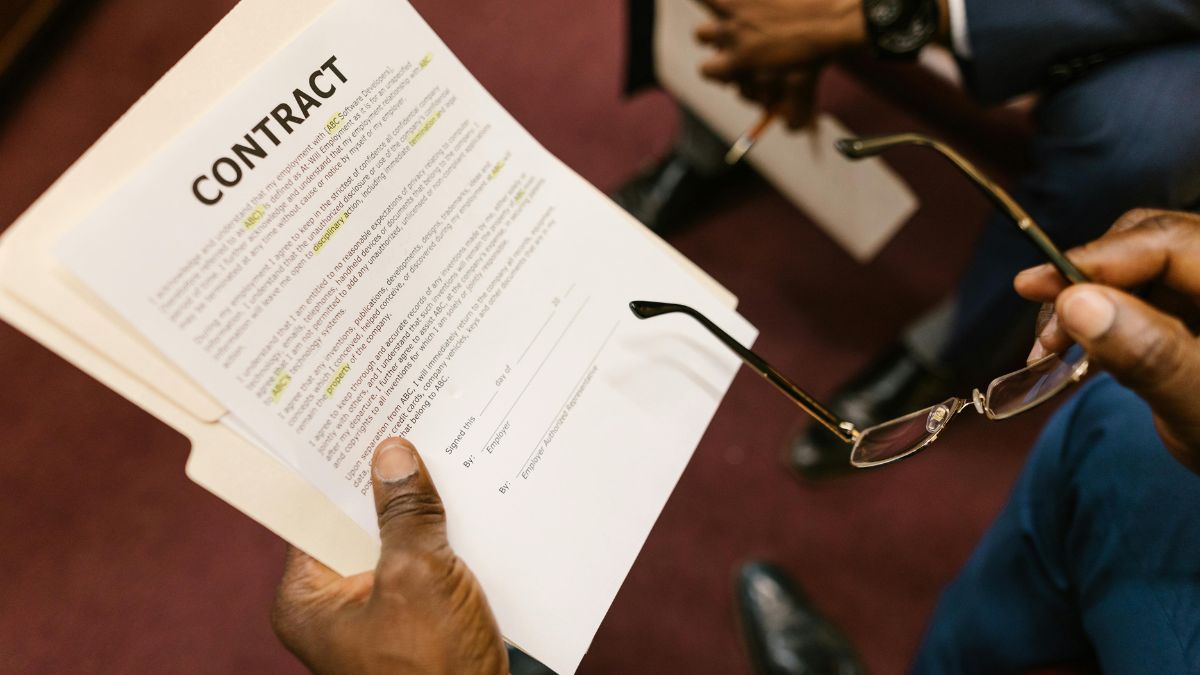
Termination is the nuclear option in a construction contract. It’s also one of the easiest rights to get badly wrong and getting it wrong can be more expensive than the dispute you were trying to end.
Here’s the thing everyone forgets: none of this runs off the “standard” wording. AS4902 (Design and Construct) and AS4000 (Construct Only) both come with detailed default and termination machinery, but that machinery gets rewritten in negotiation more often than almost any other part of the contract. So before you rely on anything below, check what’s actually in your executed contract, not what you assume is in there.
It starts with a show cause notice, not a warning letter
A lot of people describe the first step as “issuing a default notice,” as if you just write to the other side, point out the breach, and give them time to fix it. That’s not quite what’s happening.
What clause 39 actually sets up is a show cause notice. You’re not just flagging the problem; you’re calling on the other party to show cause, in writing, within a set minimum period (usually at least seven clear days), as to why you shouldn’t go ahead and exercise a right the contract gives you: terminate, take the work out of their hands, or suspend. The notice has to spell out the breach and the clause it falls under.
The distinction matters. A cure notice says “fix it and we’re square.” A show cause notice puts the ball back in their court to convince you that you shouldn’t act, and you get to weigh their response (properly and honestly, but you still have real discretion). Fixing the underlying problem helps their case enormously, but it isn’t automatically the end of the conversation the way a straight cure notice would be.
What actually counts as a “substantial breach”
Not every slip-up gets you to termination territory; it has to be substantial. In the unamended contracts, that typically covers a Contractor who:
- isn’t proceeding with due expedition, or has abandoned the works;
- won’t comply with a direction, including to fix defective work;
- hasn’t provided or maintained required security or insurance;
- has departed from the program without reasonable cause; or
- is insolvent.
And a Principal can just as easily end up on the wrong side of this. The usual suspects are failing to pay amounts properly due, not giving the Contractor the access or possession the contract promises, or otherwise sitting on obligations that go to the heart of the deal.
Again, check your contract. These lists get heavily edited in negotiation, and “substantial” is doing a lot of work in that sentence.
Suspension isn’t the universal middle option people think it is
This is where a lot of the commentary out there oversimplifies, so it’s worth being precise. Suspension isn’t a general “either side can cool things off before pulling the trigger” remedy that sits symmetrically between the two parties.
In practice, it’s mainly the Contractor’s tool, and it runs the other way to what you’d expect: if the Principal is in substantial breach (non-payment being the classic case), the Contractor generally has to suspend work first before it’s even entitled to terminate. Suspension there isn’t a soft alternative to termination; it’s a precondition to it.
On the flip side, if the Contractor is the one in default, the Principal isn’t reaching for “suspend the Contractor’s work” as a milder option. The Principal’s real choices, once show cause has failed, are to take the work out of the Contractor’s hands or terminate outright. (Separately, a Superintendent can also direct suspension for safety or compliance reasons, but that’s a different power altogether, not part of the termination pathway.)
This is worth knowing before you assume suspension is available to you as a general pressure release valve: it might not be, depending on which side of the breach you’re on.
Termination and “taking the work out of your hands” are not the same thing
Another distinction that gets flattened in a lot of explainers: taking the work out of the Contractor’s hands is its own remedy, separate from termination. The Principal can step in, take possession of the site, and complete (or have someone else complete) the outstanding work, without necessarily ending the contract itself.
That matters because the consequences aren’t identical. Security, retention, the Contractor’s entitlement to payment for completed work, and the recovery of completion costs can all play out differently depending on which pathway was actually used. If you’re advising on (or living through) a termination scenario, it’s worth being clear from the outset about which remedy is actually being exercised, not just assuming “termination” covers the field.
If you’re the builder: when it’s right to pull the trigger, and when it’s a trap
Termination (or the lead-up to it) usually stacks up in your favour when the Principal genuinely isn’t paying amounts properly due, you’ve followed the suspend-first sequence, and the non-payment continues past the show cause window with no real answer. It also stacks up when the Principal has, in substance, made it impossible for you to do the job, denying you site access, withholding directions you need to proceed, or something similarly fundamental. Principal insolvency is another clean trigger, because at that point there’s genuinely no one left to pay you.
Where it goes wrong is almost always the same story: frustration outruns process. Late or disputed payment gets treated as an automatic green light to walk off site, without checking whether the amount is genuinely due and payable or is caught up in a legitimate set-off, back-charge, or security of payment dispute. Suspending without going through the required steps first can itself become a default (wrongful suspension is one of the listed grounds against a Contractor). And a slow, difficult Principal isn’t the same as a Principal in substantial breach. If you terminate on a hunch instead of a properly built show cause trail, you can flip from claimant to defendant overnight.
If you’re the developer: when it’s right to pull the trigger, and when it’s a trap
For a Principal, termination tends to be solid ground when the Contractor has genuinely abandoned the site, stopped progressing the works without excuse, gone insolvent, or ignored a clear direction to fix serious defective work, and you’ve run the show cause process properly and kept a clean paper trail. The stronger the documentation, the stronger the position.
The trap here is impatience. Cost overruns, a Contractor you’ve lost confidence in, or a program that’s slipping aren’t automatically a substantial breach, and delay that’s actually excusable (weather, latent conditions, your own instructions) isn’t default at all. Skipping or shortening the show cause period, terminating for a reason that isn’t actually one of the listed grounds, or jumping straight to termination when taking the work out of the Contractor’s hands was the more defensible move, are all ways a Principal ends up on the wrong end of a repudiation claim. The irony is that the party trying to enforce the contract is often the one who ends up in breach of it.
Get this wrong and it gets expensive, fast
The most common (and most costly) mistake, on either side, is assuming a breach automatically hands you a right to terminate. It doesn’t. Whether that right exists, and whether you’ve followed the process correctly, depends entirely on the contract. Terminate without a proper entitlement, or without following the required steps, and you can end up the one in repudiatory breach, facing claims for loss of profit, completion costs, delay damages, and more. The party who thought they were exercising a contractual right can end up paying for exercising none at all.
Bottom line
Termination clauses exist to give both sides a structured way to deal with serious defaults, but “structured” cuts both ways. The process, the rights that flow from it, and the consequences that follow are all contract-specific. Before you send a show cause notice, suspend anything, or terminate, whichever side of the contract you’re on, read the executed agreement closely and get advice. It’s a lot cheaper than the alternative.